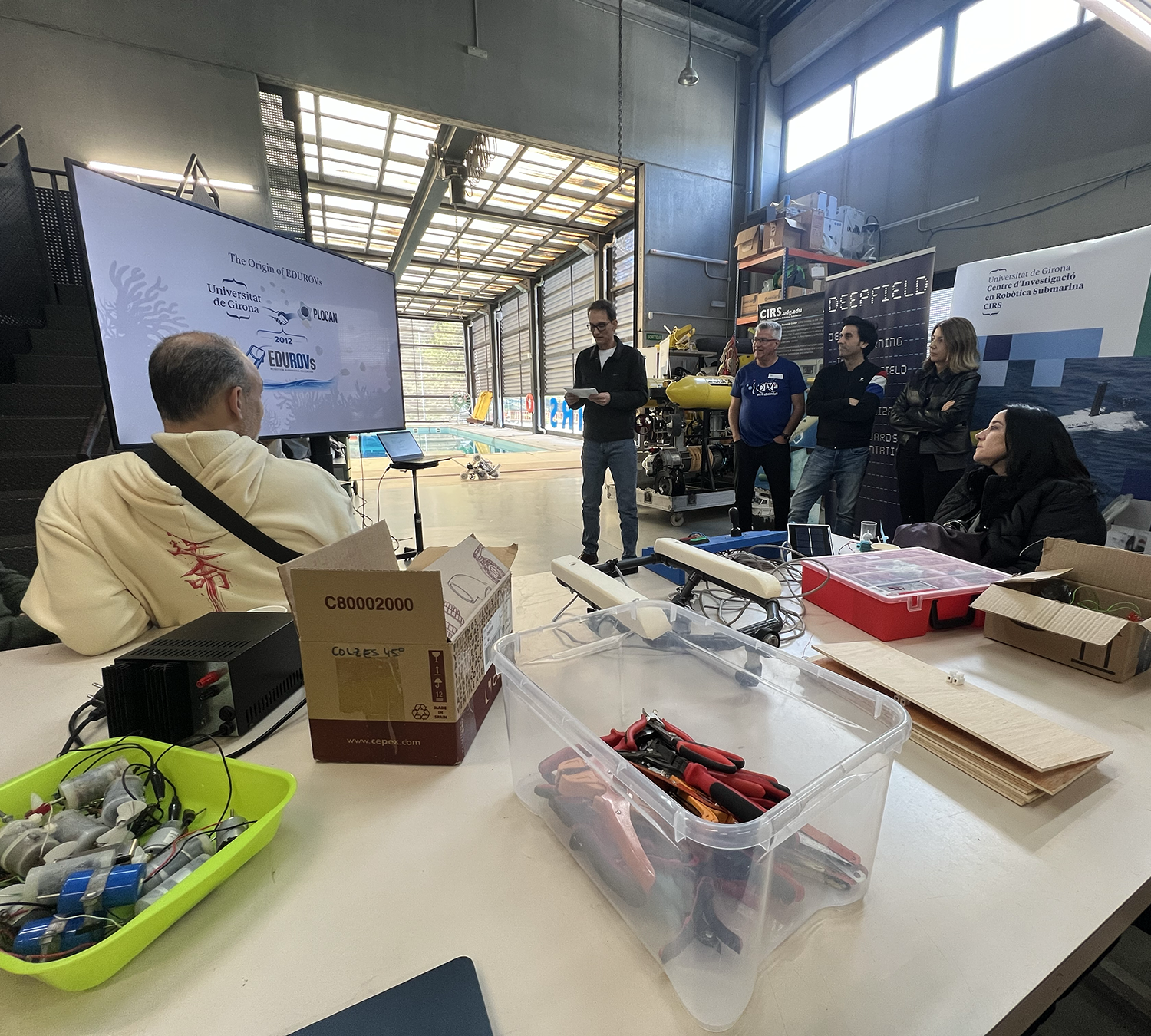
On Wednesday, 18 May 2026, the DIVE into Learning Erasmus+ project officially launched its first face-to-face consortium meeting at the UdiGitalEdu Research Group facilities and the Underwater Vision and Robotics Research Centre (CIRS) at the Parc Científic i Tecnològic of the University of Girona.
Partners from Spain, Portugal, and Greece came together to mark the start of a three-year collaboration focused on inclusive STEM education through low-cost underwater robotics, combining research, schools, and innovation centres across Europe.
Consortium Meeting
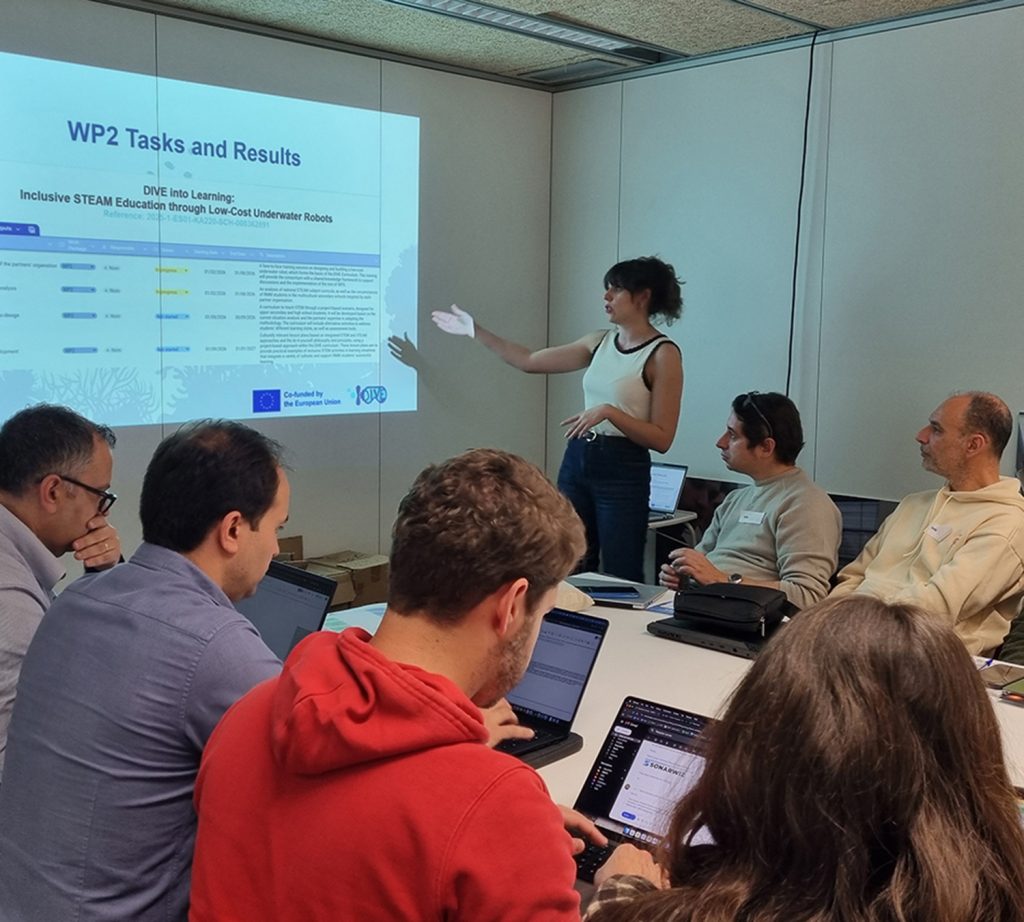
The meeting began with introductions from all partners, highlighting the diversity of institutions involved: from universities and research centres to technology platforms and secondary schools.
The project management team presented the coordination framework, including shared planning tools, task tracking systems, and agreed procedures for communication, reporting, and financial management. Monthly online meetings were also scheduled to ensure continuous coordination across partners.
The meeting then moved into the core work packages and development areas that will guide the project’s implementation in the coming months.
Communication, visibility and shared identity
Led by PLOCAN, the consortium defined its dissemination strategy, focusing on shared communication through blog posts, testimonials, and coordinated reporting. Partners agreed to:
- Use their own institutional social media channels
- Share common hashtags and tagging guidelines
- Apply a unified visual identity across all materials
The goal is to amplify the project’s visibility while leveraging existing networks across Europe.
Reflecting on impact: Theory of Change

External evaluator Colin Isham guided a reflective session on the Theory of Change, inviting partners to explore how the project will achieve its intended impact.
In group discussions, participants focused on:
- Inclusion and accessibility
- Teacher collaboration
- Quality and adaptability of learning resources
- Educational impact pathways
This helped align a shared vision of how the project will translate activities into meaningful learning outcomes.
Designing the DIVE methodology
The afternoon session focused on building the project’s educational approach, from needs analysis to classroom implementation.
Partners worked on key methodological elements such as:
- Curriculum analysis tools
- Teacher and student survey design
- Cross-country adaptation of learning materials
The methodology is grounded in:
- Project-Based Learning
- DIY / DIWO approaches
- Culturally Responsive Teaching
- Low-cost underwater robotics linked to ocean sustainability (SDG 14)
Capacity building: from pedagogy to underwater robotics

One of the most engaging parts of the meeting was the capacity-building sessions held at the CIRS facilities. Partners experienced:
- The pedagogical foundations of the DIVE approach
- Exchange of expertise between institutions
- A hands-on workshop designing and assembling a low-cost underwater robot
These activities brought the project to life, reinforcing its core philosophy: learning by doing, building, and experimenting with real technologies.
The Girona kick-off marked an important step in turning a shared idea into coordinated action. Over an intensive working day, partners not only aligned on the project’s structure and upcoming tasks, but also began building the trust, routines, and working relationships that will support the collaboration over the next three years. With a clear roadmap ahead and a strong collective motivation, the consortium leaves Girona ready to start developing, testing, and bringing the DIVE approach into real educational settings across Europe.